Cart

Item removed. Undo

Autonomic Nervous System

-Introduction

This chapter serves as a crucial foundation for candidates preparing for the Pharmacy Examining Board of Canada (PEBC) exam, focusing on the autonomic nervous system (ANS) and its interplay with the endocrine system in regulating and integrating bodily functions. The endocrine system communicates with target tissues via changes in blood-borne hormone levels, while the nervous system impacts bodily functions through the rapid transmission of electrical impulses across nerve fibers to effector cells. These cells respond to the release of neuromediator substances, highlighting the intricate mechanisms by which our body maintains homeostasis.

For those studying for the PEBC exam, understanding autonomic drugs—those that achieve their therapeutic effects by either mimicking or modifying ANS functions—is vital. This section lays the groundwork for comprehending the essential physiology of the ANS and the critical role neurotransmitters play in facilitating communication between extracellular events and intracellular chemical changes.

However, it's important for PEBC exam candidates to recognize that while this chapter provides a solid introduction to the ANS and autonomic drugs, the complexity and breadth of these topics may require further exploration beyond this text. Students are highly encouraged to consult external reference books for a more comprehensive understanding of the material. This deeper dive into additional resources will not only bolster your preparation for the PEBC exam but also enhance your grasp of pharmacological principles critical to effective pharmacy practice. Engaging with a broad range of study materials will equip PEBC exam candidates with a robust knowledge base, preparing them for the various scenarios and challenges they may encounter in their professional journey.


  1. What are the main parts of nervous system?

  1. Central Nervous System (CNS): consists of brain and spinal cord. Anything out of that is called PNS

  2. Peripheral nervous system: PNS further is divided into

  1. Afferent: impulses coming into the brain

  2. Efferent: impulses going out of brain that control 2 functions:


Voluntary: Somatic motor nerves (to the skeletal muscles)

Involuntary: Autonomic nervous system: e.g. intestine, liver, etc. ANS is further divided into 2 sections:

  • Sympathetic nervous system: fight & flight, used in emergency, fear, stress, etc.

  • Parasympathetic nervous system: rest & digest, feed & breath, baseline & survival system

  1. What is the autonomic nervous system? It is the involuntary branch of the peripheral nervous system's efferent division.

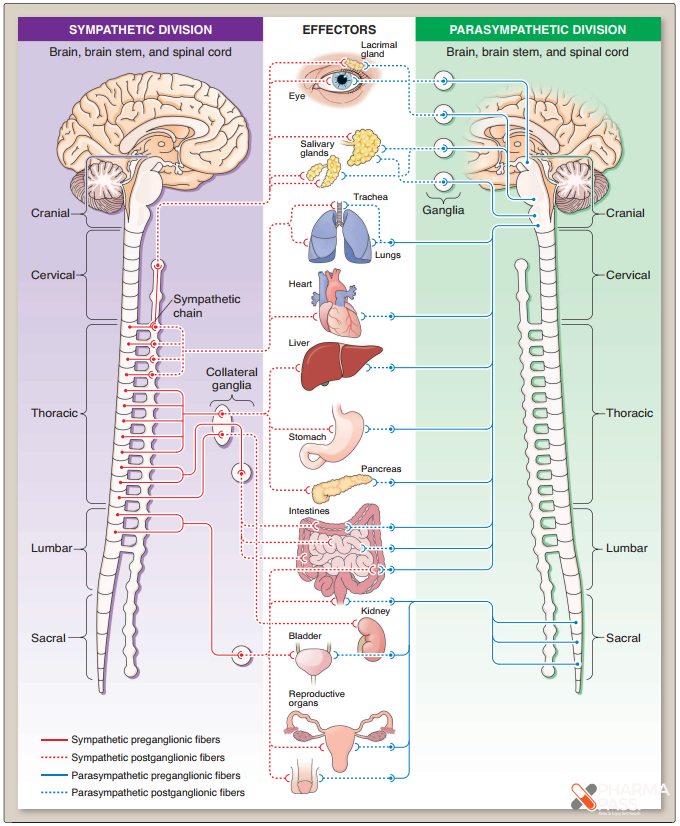
  2. Please compare sympathetic and parasympathetic nervous system?

Sympathetic & Parasympathetic Structural Comparison

Sympathetic

Parasympathetic

Fibers originate from the thoracic & lumbar levels (middle)

Originate from cranio-sacral (top & bottom) division

Short preganglionic and long postganglionic neurons

Long preganglionic and short postganglionic neurons

Ganglia is close to spinal cord

Ganglia is close to target organ

Preganglionic neurons secrete Ach to nicotinic receptors

Preganglionic neurons secrete Ach to nicotinic receptors

Postganglionic neurons secrete NE to alpha & beta receptors

Postganglionic neurons secrete Ach to muscarinic receptors


  1. Please compare sympathetic & parasympathetic functions?


SYMPATHETIC & PARASYMPATHETIC COMPARISON CHART

EYE

Effector Organ

Sympathetic

Parasympathetic

  1. Pupil size

  2. Ciliary Muscle

  3. Radial Muscle

  4. Circular Muscle

  5. Vision

  6. Conjunctival blood vessel

  7. Intraocular Pressure

  1. Larger pupil (Mydriasis α1)

  2. Relax & causes Far vision (β2)

  3. Contracts & causes mydriasis (α1)

  4. Relax

  5. Far Vison

  6. Vasoconstriction (α1)

  7. Increased

  1. Smaller pupil (meiosis)

  2. Contracts & causes near vision (M3)

  3. Relax

  4. Contract & causes meiosis (M3)

  5. Near vision

  6. Vasodilation

  7. Decreased


Sympathetic: ciliary muscle relaxes, the choroid acts like a spring pulling on the lens via the zonule fibers causing the lens to become flat and facilitate far vision.

Parasympathetic: ciliary muscle contracts, it stretches the choroid, releasing the tension on the lens and the lens becomes thicker and facilitates near vision.


HEART

Effector Organ

Sympathetic

Parasympathetic

  1. Sinoatrial node

  2. Atrioventricular node

  3. Atria

  4. Blood Pressure


  1. Heart beat rate 1) Chronotropic

  2. Conduction 1) Dromotropic

  3. Contractility 1) Inotropic

  4. Increased

  1. ↓ Heart rate (M2) - Bradycardia

  2. ↓ Conduction (M)

  3. ↓ Contractility (M)

  4. Decreased


Conduction system of the heart


BLOOD VESSELS

Effector Organ

Sympathetic

Parasympathetic

  1. Coronary Arteries

  2. Skeletal Muscles

  3. Skin

  4. Mucous membrane

  1. Vasodilation (β2)

  2. Vasodilation (β2)

  3. Vasoconstriction (α1)

  4. Vasoconstriction (α1)

Not much role in blood vessels

GIT

Effector Organ

Sympathetic

Parasympathetic

  1. Stomach & intestine motility

  2. Stomach sphincter

  1. Motility & Peristalsis

  2. Constrict Sphincter/ Contraction (α1)

  1. Motility and Peristalsis

  2. Relax Sphincter

BLADDER & UTERUS

Effector Organ

Sympathetic

Parasympathetic

  1. Detrusor (Bladder Wall)

  2. Bladder Sphincter

  1. Relaxation (β2)

  2. Constrict Sphincter/ Contraction (α1)

  1. Contraction

  2. Relaxation

Salivary Glands

Viscous secretion (α1)

Water Secretion (M)

Liver

Glycolysis

Gluconeogenesis

Glycogenolysis (β2)

Glucose uptake & Glycogen synthesis (M)

Lung (bronchial muscle)

Relaxation (β2)

Contraction (M2)

Spleen

Contraction (β1)


Pancreas

insulin (β1)

insulin (β2)

insulin

Kidney

Renin Secretion (β1)


Male sex organs

Ejaculation (β2)

Erection (M)

Lacrimal glands

-

Tear Secretion

Nasopharyngeal glands

-

Mucus secretion

Sweat glands

Secretion (M)

Secretion (M)

Adipose Tissues

Lipolysis (β3) Metabolism of fatty acids


  1. What are adrenergic receptors (Sympathetic receptors)? Adrenergic receptors, also known as sympathetic receptors, belong to the group of G protein-coupled receptors that interact with the body's naturally produced catecholamines, norepinephrine (noradrenaline) and epinephrine (adrenaline), as well as various medications including β-blockers, β2-agonists, and α2-agonists. These drugs are commonly prescribed for conditions like hypertension and asthma. When catecholamines bind to adrenergic receptors, they typically activate the sympathetic nervous system (SNS), initiating a series of physiological responses.

  2. What are different adrenergic receptors?

adrenergic receptors - sympathetic

α1

All contraction & constriction of sympathetic

β2

All relaxation & dilatation of sympathetic

β1

All heart effects of sympathetic

α2

Act as a brake that suppresses sympathetic activity

β3

Lipolysis & bladder


PARASYMPATHETIC

  1. What are cholinergic receptors (parasympathetic receptors)?  Cholinergic receptors are cell surface proteins that become activated upon binding with the neurotransmitter acetylcholine. These receptors are classified into two categories: nicotinic and muscarinic receptors.

  2. Where is Ach synthesized and released from?Acetylcholine is a crucial neurotransmitter that is released by nerve endings within both the peripheral and central nervous systems. This chemical messenger is produced inside the nerve terminals through the synthesis from choline, which is absorbed from the surrounding tissue fluid into the nerve ending via a specific transport mechanism. In the central nervous system, acetylcholine is involved in various functions including memory and muscle control. In the peripheral nervous system, it is essential for activating muscle actions and influencing the parasympathetic nervous system, which manages bodily functions such as saliva production, digestion, and heart rate.

  3. What are parasympathetic (Cholinergic) receptors?

NICOTINIC

Receptor

Ligand Gated Cation Channel

Location

  • Nm (Muscular)= Motor end plate of muscles  

  • Nn (Neuronal)= affects CNS and released by adrenal medulla

  • Ng = existing in all ganglia

Agonist

  • Nicotine & Ach (Natural)

Function

  • Nm 🡪 Muscle contraction

  • Nn 🡪 release of adrenaline (epinephrine) & excitation

  • Ng 🡪 ganglionic transmission, role in Alzheimer disease

MUSCARINIC

Receptor

G-Protein Coupled Receptors

M1

Location: located in CNS autonomic ganglia & presynaptic nerve terminal.

Function: modulate neurotransmission and causes excitation.

Mechanism: M1 functions by increasing IP3 in cells.

M2

Location: M2 receptors are cardiac receptors found in cardiac tissue, primarily in the sinoatrial and atrioventricular nodes. 

Function: M2 receptors function to slow heart rate and conduction. 

Mechanism: M2 functions by increasing K+ efflux or decreasing cAMP

M3

Location: M3 receptors are found on smooth muscles, glands, and vascular smooth muscle, (almost everywhere).

Function: 

  • When activated on smooth muscle, causes contraction of smooth muscle

  • When activated on vascular smooth muscle, M3 receptors cause vasodilation.

  • When activated on glands, causes release of glandular secretions

Mechanism: M3 functions by increasing IP3 & cGMP as a result of nitric oxide stimulation.

Function

  • M1 & M3 🡪 IP3/DAG🡪 Excitatory

  • M2 🡪 cAMP and has inhibitory effect

  1. What are different cholinergic drugs?

DIRECT CHOLINERGIC AGONISTS = ACH AGONISTS

CHOLINOMIMETIC CHOLINE ESTERS: Bethanechol, Methacholine, Carbachol

↓ Heart rate & output, ↓ Blood pressure, ↑ saliva secretion, Miosis. The following are synthetic Acetylcholine

Bethanechol(M)

  • Used to treat postoperative abdominal distention & urinary retention

  • Note: Atropine is given pre-operatively to prevent voiding of the bowel/bladder during surgery, Bethanechol is then given postoperatively to revert this action

Methacholine (M>N)

  • Used as test for asthma. Provocholine is only used for testing and not to treat any conditions.

Carbachol (NM)

  • Post-Ocular Surgery Application: Administered after eye surgery to counteract the effects of pre-operative treatments like atropine, which is used to dilate the pupil. Carbachol helps to constrict the pupil back to its normal size by stimulating the parasympathetic system.

  • Glaucoma Treatment: It is also utilized in the management of glaucoma by reducing intraocular pressure, aiding in the control of the condition.

Note: Atropine is administered before surgery to dilate the pupil and prevent it from responding to light. After the operation, Carbachol is used to constrict the pupil back to its normal size. This parasympathetic agent, Carbachol, helps in reversing the dilating effect of atropine, restoring the pupil's natural state after procedures that induce mydriasis.

CHOLINOMIMETIC ALKALOIDS: Cevimeline, Pilocarpine

Pilocarpine

  • Used in the eye to treat glaucoma (M3) by contraction of iris & ciliary muscle leading to miosis and leaving of aqueous humor through trabecular meshwork and decrease pressure

  • Used to treat dry mouth (xerostomia), particularly in Sjogren’s syndrome & cancer.

Cevimeline

  • used to treat dry mouth (xerostomia), particularly in Sjogren’s syndrome

INDIRECT CHOLINERGIC AGONISTS Function by inhibiting cholinesterase, thus the amount of Ach increases in the body

Reversible

Side Effects

Physostigmine

  • Tertiary amine, so can get into brain (BBB)

  • Used to treat atropine & scopolamine toxicity.

  • Used to treat glaucoma and delayed gastric emptying

  • Both peripheral & central SE

Peripheral: Bronchospasm Diarrhea

Frequent urination

Salivation

Meiosis  

Central:

Tremors & Parkinson’s

Restless leg   

Physostigmine has both peripheral and central SE while others have only peripheral SE

Rivastigmine has only central side effects because only acts on brain

Neostigmine

  • Quaternary amine, so does NOT get into brain

  • Used to treat curare poisoning

  • Used in postoperative abdominal distention & urinary retention

  • Used to treat myasthenia gravis but not 1st line.

Pyridostigmine & Ambenonium

  • Used to treat myasthenia gravis.

  • More specific on the skeletal muscles than neostigmine.

Edrophonium

  • Used only in diagnosis of myasthenia gravis improvement of muscle contraction for very short time

Rivastigmine & Donepezil & Galantamine

  • Used to treat dementia of the Alzheimer's, because Alzheimer is Ach deficiency

Carbamate


Irreversible cholinesterase inhibitors: Organophosphates 🡪 Function by inhibiting cholinesterase irreversibly

 Sarin, Parathion, Malathion, Echothiopate: Cause Bronchospasm, Salivation, lacrimation, Convulsions

MUSCARINIC ANTAGONIST – PARASYMPATHOLYTIC - ANTIMUSCARINIC

Belladonna Alkaloids - Tertiary Amines – pass BBB

Atropine

Indications:

  • Atropine is a medication utilized for managing poisoning caused by organophosphates like sarin gas.

  • In ophthalmology, it's employed as a mydriatic agent for dilating pupils prior to surgery, ensuring the pupils remain dilated and unreactive to light.

  • For gastrointestinal complaints, atropine is effective as an antispasmodic by counteracting the spasmodic action of acetylcholine.

  • It also acts to suppress secretions that are stimulated by cholinergic activity.

  • In the respiratory system, atropine serves to widen the airways.

  • Administered before surgical procedures, atropine helps to inhibit involuntary urination or defecation.

  • Atropine's action does not extend to nicotinic receptors.

  • When used in eye treatments, atropine's binding to pigments in the iris facilitates a sustained release over an extended period.

  • The drug works by relaxing the muscles of the iris sphincter, leading to pupil dilation.

  • By counteracting the parasympathetic nervous system, atropine relaxes smooth muscle tissue, escalates heart rate, promotes cardiac conduction, and suppresses secretions from exocrine glands.

  • High doses of atropine are known to produce a range of effects, including secretion inhibition, muscle paralysis, and blood vessel dilation.

  • It also reduces tear production by the lacrimal glands, resulting in dry eyes.

  • Atropine impacts the heart by blocking the vagus nerve's influence on the sinoatrial and atrioventricular nodes, which speeds up the heart rate.

  • In the pulmonary system, atropine induces the widening of air passages and decreases secretion in the respiratory tract.

  • It has an impact on the digestive system by reducing the contractions of stomach and intestinal muscles, hence decreasing gut activity.

  • Atropine may induce both calming and stimulatory effects on the central nervous system.

  • Furthermore, atropine has an effect on the body's ability to regulate temperature by halting sweating and causing the blood vessels in the skin to dilate.

Side Effects:

  • Hallucinations

  • Excitation, Delirium, Ataxia

  • Tachycardia

  • Blurred Vision (Effect on ciliary muscles)

  • Photophobia (Dilated Pupil)

  • Dry mouth & thirst

  • Urinary retention & Constipation

  • Fever: overheat due to blocking of sweating by suppression of M3 receptors of sweat gland

  • Flushing: flushing is secondary to overheating due to block of sweating. Antagonism of M3 receptors on sweat glands will block the sweating response. This will cause overheating and compensatory superficial cutaneous vasodilation to increase heat loss.

C/I:

  • Glaucoma 🡪 because atropine increases intraocular blood pressure

  • Arrhythmia 🡪 causes tachycardia

Scopolamine (Hyoscine)

  • Used to treat abdominal pain as antispasmodic 

  • Used to treat motion sickness

  • Used to treat postoperative nausea & vomiting

  • Used to treat clozapine-induced hypersalivation (drooling)

  • Used to treat irritable bowel syndrome

Benztropine & Trihexyphenidyl

  • Used to treat Parkinson’s associated with antipsychotic drugs’ side effects

Tropicamide & Homatropine

  • Used in ophthalmic diagnosis as mydriatic agent (short duration)

Synthetic Quaternary amine

Ipratropium & Tiotropium

Used as rescue for asthma, COPD and emphysema – Side effect: only dry mouth

Dicyclomine

Used to treat irritable bowel syndrome by relaxing intestinal smooth muscle

Uroselective

Drug Names: Oxybutynin, tolterodine, darifenacin, solifenacin & trospium

Mechanism: They are uroselective blockers that have a higher selectivity for the urinary bladder. 

Indication: Used to treat overactive bladder symptoms including: daytime urinary frequency, nocturia, urgency, and incontinence.

Pirenzepine

  • Pirenzepine selective M1 blocker used to reduce gastric acid secretion in patients with peptic ulcers. It

Mechanism: Pirenzepine functions by preventing paracrine cell from excretion of histamine, which is a potent gastric acid stimulant.  

Glycopyrrolate

  • Glycopyrrolate is used preoperatively to inhibit salivary and respiratory tract secretions. 

  • Glycopyrrolate is combined with anesthetics to inhibit the secretory effects of cholinesterase inhibitors such as neostigmine.

NICOTINIC BLOCKERS – (GANGLIONIC BLOCKERS & NEUROMUSCULAR BLOCKERS)

  • Ganglionic blockers Ganglionic blocking agents were originally designed to diminish overactivity in the autonomic nervous system. Nevertheless, because of their broad action and the wide array of side effects, their use has largely been discontinued. These agents are used for surgical patients to relax the muscles during surgery

  • Neuromuscular blocking agents serve as powerful muscle relaxants with the primary effect of inducing muscle weakness and paralysis. These agents are instrumental in medical practices, especially during surgical procedures, to ensure muscle relaxation and facilitate intubation and ventilation. Based on their mechanism of action, neuromuscular blocking agents are classified into two distinct types: depolarizing blockers and nondepolarizing blockers.

Depolarizing Blockers: This category of neuromuscular blocking agents works by mimicking the neurotransmitter acetylcholine, binding to acetylcholine receptors at the neuromuscular junction. Unlike acetylcholine, however, depolarizing blockers are not rapidly degraded by acetylcholinesterase. As a result, they cause a prolonged depolarization of the muscle endplate, initially triggering muscle contractions followed by paralysis. Succinylcholine is a well-known example of a depolarizing blocker, often used to facilitate rapid sequence intubation due to its quick onset and short duration of action.
Nondepolarizing Blockers: These agents block the action of acetylcholine at the neuromuscular junction without causing the muscle fibers to depolarize. They compete with acetylcholine for binding sites on the acetylcholine receptor, effectively preventing muscle contraction and leading to paralysis. Nondepolarizing blockers tend to have a longer duration of action compared to depolarizing blockers. Examples include rocuronium, vecuronium, and pancuronium. These drugs are used for a range of purposes, from facilitating intubation to ensuring muscle relaxation during surgery.

Both types of neuromuscular blocking agents are crucial in modern anesthesia and critical care, allowing for safer surgical procedures by ensuring that patients remain completely still and reducing the risk of complications from involuntary muscle movements. However, because these agents significantly affect breathing by paralyzing the respiratory muscles, they require careful monitoring and are typically administered by anesthesiologists or other trained healthcare professionals.


Depolarizing Non-Competitive

Drug name: Succinylcholine   

Mechanism: Succinylcholine binds to nicotinic receptors on skeletal muscles and causes persistent depolarization. The persistent depolarization produces muscle fasciculations followed by sustained muscle paralysis. It has a short period of action (5 – 10 minutes) before being degraded by cholinesterase

Indication: Succinylcholine is used to produce airway relaxation to allow for intubation during surgery. 

Side Effect: Succinylcholine can cause hyperkalemia that can lead to cardiac arrest, especially in patients with unhealed skeletal muscle injury or muscle weakness.  Malignant hyperthermia, hyperkalemia and myalgia

Non-Depolarizing Competitive

(Curariform Drugs)

Drug name: Atracurium· Tubocurarine· Doxacurium· Pancuronium· Vecuronium· Mivacurium

Mechanism: 

  • These drugs function as competitive antagonists of acetylcholine at nicotinic receptors and cause muscle relaxation. 

  • They also stimulate the release of histamine from mast cells and can cause bronchospasm, hypotension, and tachycardia. 

Indication: Indicated in anesthesia during surgery to relax skeletal muscles.

Side effects: Decrease BP, paralysis of diaphragm

Antidote: Neostigmine, edrophonium (cholinesterase inhibitors)

Myasthenia gravis: This disease is a disorder of skeletal (voluntary striated) muscle due to excessive cholinesterase or lack of acetylcholine (ACh). It is characterized by increasing fatigue and muscle weakness; some cases are mild, some are severe. Death usually occurs due to respiratory depression.

  • The neurotransmitter at a neuromuscular junction is acetylcholine

  • The neurotransmitter at a neuromuscular junction is the same as the transmitter substance at parasympathetic postganglionic nerve ending

  • The neurotransmitter at a neuromuscular junction is the same as that released by all preganglionic fibers

  • Liver is not innervated by the parasympathetic.


SYMPATHETIC NERVOUS SYSTEM


Sympathomimetics – Adrenergic Agonists

Classification of Adrenergic Agonists According to Their Chemical Structure

Catecholamines

Epinephrine (adrenaline) & Norepinephrine (noradrenaline), Dopamine & Dobutamine, Isoprenaline.

Non-catecholamines

The rest of adrenergic agonists are non-catecholamines.

Classification of Adrenergic Agonists According to Action Pathway

Direct Acting

  • They produce direct stimulation of the receptors.

  • Epinephrine (α, β), Norepinephrine (α), Phenylephrine (α1), Dobutamine (β1), Isoprenaline (β), Salbutamol (β2).

Indirect Acting

  • They act by increasing the release of NE from its stores (vesicles). This NE will then stimulate the receptors: Cocaine, Amphetamine, Tyramine.

  • Cocaine MOA: Inhibits norepinephrine & dopamine reuptake in the sympathetic neuron by inhibiting NET which will cause NE concentration to increase in synapse.

  • Amphetamine MOA: Inhibits norepinephrine reuptake in the sympathetic neuron by inhibiting NET. Also increases cytoplasmic NE concentration and causes reverse transport into the synapse by catecholamine transporter. Both in CNS and PNS

  • Tyramine MAO: Same as amphetamine. Tyramine is not synthetic and it naturally synthesized by body.

Mixed Acting

  • Mixed-acting adrenergic agonists are compounds that cause activation of adrenergic receptors by both direct binding as well as release of endogenously-stored norepinephrine from presynaptic terminals. Ephedrine is the prototype mixed-acting agonist. E.g. Dopamine, Ephedrine, Pseudoephedrine

α1 Agonists: Ephedrine · Pseudoephedrine · Phenylephrine · Methoxamine · Xylometazoline. Midodrine

Mechanism

  • Increase in inositol triphosphate (IP3) & diacylglycerol (DAG) that leads to Ca+ and contraction

Tissue

  • Iris muscle of eye (mydriasis),

  • Heart

  • GI,

  • Bladder Sphincter,

  • Prostate

  • Skin, 

  • Splanchnic smooth muscle (causes hair erection)

Functions

  • Phenylephrine: is used as eye drop to cause vasoconstriction and remove eye redness

  • Xylometazoline / Pseudoephedrine: is used as nasal decongestant

  • Midodrine: The only indication is orthostatic hypotension

  • Decongestion: α1 Constricts and contract arterioles in the nasal mucosa

  • Mydriasis: α1 Contracts eye radial muscle that causes mydriasis

  • Ejaculation: α1 causes contraction of vas deferens that causes Ejaculation

  • mainly smooth muscle contraction & blood vessels including those of the skin, gastrointestinal system, kidney (renal artery) and brain.

  •  blood flow

  • reduce airway resistance by. decongestion

  • salivary secretion

  • TPR 

  • glycogenolysis and gluconeogenesis from adipose tissue and liver

  • sweating

  • Na+ reabsorption from kidney

  • Contraction of ureter, hair (arrector pili muscles), uterus (when pregnant), urethral sphincter, bronchioles

Side Effects

  • Tachycardia & palpitation & tremor

  • diabetes, hyperthyroidism (more sensitive to sympathomimetics), BPH, glaucoma.

  • Avoid use with uncontrolled hypertension

  • Prostate: In patients with prostate enlargement, urinary difficulty may develop or worsen due to smooth muscle contraction in the bladder neck

α2 Agonists: : Methyldopa, Clonidine, Brimonidine: α2 is brake of sympathetic and are called imidazolines

Mechanism

  • Inhibition of adenylate cyclase and decrease in cyclic adenosine monophosphate (cAMP)

  • inhibitory action of epinephrine & norepinephrine

  • Brimonidine is used to treat glaucoma by decreasing aqueous humor formation by binding to α2-receptors. Clinically, brimonidine is used to control intraocular pressure, treat glaucoma and ocular hypertension.

Tissue

  • Presynaptic nerve terminals (CNS)

  • Platelets

  • Fat cells

  • Walls of the GI tract

Functions

  •   Decrease release of acetylcholine.

  •   Decrease insulin release from the pancreas

  • norepinephrine release in CNS

  • peripheral vascular resistance

  • Blood pressure

  • platelet aggregation (increased blood clotting tendency)

  •   glucagon release from the pancreas

  • Inhibition of lipolysis

  • contraction of sphincters of the GI-tract

  • Decrease motility of smooth muscle in gastrointestinal tract

  • Decreased aqueous humor fluid production from the ciliary body

  • Sedation & Analgesia

  • Used in hypertension to decrease blood pressure

  • Used in impotence to relax penile smooth muscles and ease blood flow

Therapeutic Use

  • Methyldopa is the drug of choice in pregnancy hypertension

  • Clonidine is used for opioid withdrawal symptoms like flushing

  • Clonidine is used for hot flushes of menopause and migraine.

  • Used in Hypertension with renal disease (no decrease blood flow to kidney) not commonly used for HTN

Side Effects

  • Rebound hypertension in clonidine

Mixed β1&2 Agonists: Dobutamine, Isoprenaline (isoproterenol)

Mechanism

  • G-coupled receptor stimulation of adenylyl cyclase and the generation of cAMP

Isoproterenol:

  1. β2 causes vasodilation and decreased arterial and diastolic blood pressures

  2. β1 has chronotropic effect and causes increased systolic blood pressure

  3. β1 has stronger effect thus increasing blood pressure is dominant

Tissue

  • Sinoatrial (SA) node -HR 

  • Atrioventricular (AV) node

Functions

  • positive chronotropy 🡪 Increase heart rate

  • positive dromotropic 🡪 increase conduction velocity 

  • positive inotropy 🡪 increase contractility

  • positive lusitropy 🡪 increasing calcium ion and heart-rate. enabling the heart to relax more rapidly.

  • increase renin secretion

  • Increase lipolysis

  • Increase bronchodilation

  • Systolic BP

  • ↑ C.N.S Anxiety

  • increase ghrelin (hunger hormone also known lenomorelin) secretion from the stomach

  • Sensitive to both norepinephrine and epinephrine, more sensitive than the ᾳ1

Therapeutic Use

  • Heart failure (both)

  • Bradycardia(both)

  • Heart block (both)

  • Dobutamine injection is done directly into heart as the last choice for the heart to beat again.

Side Effects

  • Tachycardia

β2 Agonists: SABA: Salbutamol, terbutaline / LABA: Salmeterol, formoterol

Mechanism

  • G-coupled receptor stimulation of adenylyl cyclase and the generation of cAMP

Tissue

  • Smooth Muscles of skeletal muscle: eye, bronchioles, bladder, uterus, GI smooth muscle

  • Blood vessels supplying skeletal muscles, heart, liver

  • Liver & lungs

  • GI tract

  • Adipose tissue

  • Salivary gland

Functions

  • Relaxation of smooth muscles

  •  GI tract motility

  • TPR – Total peripheral resistance

  •  AFTER LOAD: the pressure the heart must work against to eject blood during systole.

  • Diastolic BP

  • Vasodilation of blood vessels

  • Dilation of Bronchial smooth muscle

  • Relaxation of the bladder wall (Detrusor)

  • Increase Glucagon

  • insulin secretion

  • k+ uptake by skeletal muscle 🡪 hypokalemia

  • Skeletal muscle twitches

  • Glycogenolysis, Gluconeogenesis, Glucogenesis

  • Lipolysis

  • Sensitive to epinephrine not norepinephrine

Therapeutic Use

  • Used for Asthma

  • SABA used for acute asthma attach – onset 3-5 min, effect 4-6hr

  • SABA has additive effect with anticholinergic drugs (Ipratropium)

  • LABA used for chronic asthma used every day. Onset 1-3 min, effect 12hr

  • LABA has synergistic effect with corticosteroids.

  • Fluticasone + Salmeterol = Advair

  • Budesonide + Formoterol = Symbicort

β3 Agonist: Mirabegron

Therapeutic Use

  • Used in overactive bladder to initiate urinary retention

Side Effects

  • Hypertension

  • Cold symptoms

  • Constipation  

Mixed α & β agonist: Epinephrine, Norepinephrine, Dopamine 🡪 All kinds of sympathetic effects

Norepinephrine

  • α1, α2, β1 agonist

  • Baroreceptor stimulates cardiac contractility

  • Vasoconstriction

  • ↑ Cardiac contractility

  • ↑ Systolic blood pressure (SBP)

  • ↑ Diastolic blood pressure (DBP)

  • ↑ Peripheral resistance (PR)

  • Reflex bradycardia

Epinephrine

  •  At higher doses affects α1 & α2, at lower doses affects β1 & β2 

  • ↑ Systolic (SBP) and slight decrease diastolic (DBP), reflex bradycardia.

  • ↑ heart O2 demand

  • It is an intense bronchodilator is used for allergic and histamine induced bronchoconstriction & acute asthma

  • Used in anaphylactic shock

  • Used in anesthesia (1:100,000) due to vasoconstrictor

  • Used in Glaucoma: Epinephrine ophthalmic is used in glaucoma by reducing intraocular pressure in two ways: 

  1. Epinephrine reduces the production of fluid inside the eye

  2. Epinephrine increases the amount of fluid that drains from the eye.

  • Has significant hyperglycemic effect (glycogenolysis)

  •  Release of insulin and causes lipolysis

Side Effects:

  • CNS: Anxiety, fear, tension, headache, and tremor.

  • Hemorrhage: Elevation of BP may cause hemorrhage.

  • Arrhythmias: Can trigger arrhythmias in patient using digitoxin

  • Pulmonary edema.

Dopamine

  •  Act on D1, D2, D3, D4, D5, and mixed α1, α2, β1, β2 agonist

  •  At higher doses affects α1 & α2, at lower doses affects β1 & β2 

  •  Produces vasodilation by binding to D1 & D2 in the mesenteric and renal vascular beds

  • The first line agent for cardiac shock due to renal diseases

AMPHETAMINES: Amphetamine/dextroamphetamine*, methamphetamine*, methylphenidate*, tyramine, ephedrine*

Therapeutic Use: Narcolepsy, ADD, ADHD

Mechanism of Action: This class is indirect sympathetic agonist and Increase release of catecholamines from vesicles into nerve terminal

Side Effects: 

  • Stomach upset, anorexia

  • Restlessness

  • Adverse cardiac events (elevates heart rate & blood pressure)

  • Events of elevated adrenoceptors activation

  • Tyramine-induced hypertensive crises with MAOi interaction


Sympatholytic – Adrenergic Blockers

  α1 antagonist: Prazosin, Terazosin, Doxazosin, Tamsulosin (α1Α) & Alfuzosin (α1A)

Mechanism

  • Peripheral vasodilation

  • peripheral vascular resistance and lower arterial blood pressure

  •  Relaxes Internal bladder sphincter muscle

Therapeutics use

  • Tamsulosin: only for Benign Prostate Hyperplasia – should take at night due to hypotension

  • Terazosin & Prazosin: drug of choice in patient with BP and BPH.

  • Doxazosin, Prazosin: used for post traumatic insomnia. Post-traumatic stress disorder (PTSD) and nightmares.

  • Used to treat Pheochromocytoma: cancer in adrenal gland that secrets excessive epinephrine that increases BP

  • PVD Peripheral Vascular Disease (Raynaud`s syndrome): in PVD blood vessels are narrow and cannot carry enough blood to lower trunk of body, so α1-blocker is used to cause vasodilation and carry enough blood.

  • Might help erection since erection is a vasodilation procedure.

Side effects

  • Orthostatic/postural hypotension and first dose syncope (drowsiness & fainting)

  • Reflex tachycardia (palpitation)

  • Headache: causes vasodilation in brain vessels and cause headache

  • Hot flushes: causes vasodilation in facial vessels and leads to flushed on the cheeks

  • Sedation

  • Meiosis

  • Tamsulosin and alfuzosin are a selective α1A receptor blocker and has no postural hypotension

α2 Antagonist:  Yohimbine, Mirtazapine

Functions

  • Blocks presynaptic α2

  • HR and BP

Therapeutics use

  • Yohimbine is used as aphrodisiac for impotency treatment. Yohimbine's peripheral autonomic nervous system effect is to increase parasympathetic (cholinergic) and decrease sympathetic (adrenergic) activity.

Side effects

  • Postural hypotension

Mirtazapine

  • Used as antidepressant

  • Antagonist of presynaptic α2, causes NE and serotonergic (5HT) activity.

 α1 & α2 Antagonists

Phentolamine

(Reversible)

  • Phentolamine is a competitive, reversible, short acting imidazoline, administered by injection

  • Phentolamine causes vasodilation, decreases peripheral vascular resistance, and decreases blood pressure. 

  • Phentolamine can be used to treat necrosis & ischemia after injection of an α-adrenoreceptor agonist 

(e.g. accidental epinephrine injections).

  • Phentolamine can be used in Pheochromocytoma which is a catecholamine induced vasoconstriction

Phenoxybenzamine

(Irreversible)

  • Phenoxybenzamine is Non-competitive, long acting (3 to 4 days) blocker that is administered orally.

  • Phenoxybenzamine is used to treat hypertension in pheochromocytoma by vasodilation.

  • Phenoxybenzamine is used occasionally in patients to ↓blood pressure.

  • NE release is enhanced due to blockade of presynaptic α receptors which causes excessive response.

1st Gen: Nonselective (β1& β2& β3) blockers: Propranolol · Pindolol · Nadolol · Timolol· Levobunolol, Sotalol / BP & Glaucoma

Vasoconstriction of coronary and skeletal muscle arteries by blocking β2

Side Effects: Bradycardia, Bronchospasm (avoid non-selective in asthma and COPD), Fatigue, hyperkalemia

C/I: 

  1. Diabetes drugs (metformin, insulin): Administering insulin or metformin typically results in lowered blood glucose levels. The β3-adrenergic receptors play a role in breaking down fats and producing glucose, processes which can raise blood sugar levels. However, when a β-blocker is used, it also inhibits β3 receptors, interfering with these sugar-increasing processes. Therefore, the concurrent use of a β-blocker with insulin can increase the risk of a significant drop in blood sugar, known as hypoglycemia.

  2. Hyperlipidemia: The β3-adrenergic receptor plays a key role in breaking down fats. However, the use of β-blockers can inhibit β3, impairing its ability to conduct lipolysis, potentially contributing to elevated lipid levels in the blood.

  3. Bradycardia: When β-blockers are used alongside other medications that control heart rate, such as digoxin, there can be an excessive reduction in heart rate, leading to bradycardia.

  4. Asthma: β-blockers can lead to bronchoconstriction, making them problematic for individuals with asthma as they can exacerbate respiratory difficulties.

Peripheral Vascular Disease (PVD): β2-blockers may cause constriction of the blood vessels in the muscles, which can worsen symptoms
  • What are β-blockers that have first pass metabolism? Propranolol & timolol

  • What is the longest acting β-blocker?  Nadolol

Propranolol

Propranolol and its Effects


  • Blood Pressure Reduction: Propranolol primarily lowers blood pressure by decreasing the heart's output.

  • Renin Production Inhibition: It also blocks the β1 receptors' stimulation by catecholamines, leading to a reduction in renin production and consequently less water retention.

  • Action on Peripheral β-Adrenoceptors: By acting on the peripheral presynaptic β-adrenoceptors, propranolol diminishes the sympathetic nervous system's vasoconstrictor action, affecting blood vessel constriction.

  • Peripheral Resistance: Initially, propranolol may increase peripheral resistance, but with long-term use, it typically results in decreased peripheral resistance, especially beneficial for patients with hypertension.


Clinical Uses of Propranolol


  • Post-Myocardial Infarction: It's used for its cardioprotective effects after a heart attack.

  • Migraine Prevention: Propranolol can cross the blood-brain barrier (BBB), making it suitable for preventing migraines.

  • Essential Tremor: It's effective in reducing tremors.

  • Performance Anxiety: Helps in managing symptoms of anxiety in stressful situations.

  • Hyperthyroidism and Thyroid Storm: Propranolol is employed to manage symptoms such as tachycardia, tremor, and anxiety during hyperthyroid states.

  • Pheochromocytoma: It is the sole β-blocker used alongside α-blockers to manage this condition, where it helps control hypertension and symptoms caused by excess catecholamine production.

  • Propranolol is used for hypertension

  • Acts as membrane stabilizer 🡪 which means local anesthetic that happens dues to blockade of Na+ channels

  • cardiac output by both negative inotropic and chronotropic effect: β1 effect

  • Lipid soluble BBs propranolol cause drowsiness, headache, depression, sexual dysfunction

  • Use in Angina: Propranolol is generally not advised for angina because it blocks B2 receptors. These receptors facilitate vasodilation in the coronary arteries, and their blockade by propranolol can result in vasoconstriction, potentially reducing blood flow to the heart muscle and exacerbating angina symptoms.

Overdose Management: In cases of propranolol overdose, medications such as glucagon, salbutamol, and isoprenaline are recommended due to their ability to counteract the effects of beta-blockade, helping to manage and mitigate toxicity symptoms.

Timolol (non-selective) & Betaxolol (selective)

  • Glaucoma Treatment: These are the exclusive β-blockers available as eye drops to lower intraocular pressure in the treatment of glaucoma. They work by reducing the production of aqueous humor, thereby decreasing intraocular pressure.

  • Oral Uses: When taken orally, both medications are prescribed for managing high blood pressure and angina, particularly when the angina is due to reduced blood flow to the heart. A common side effect in this context is bradycardia, or slowed heart rate.

  • Cardiac Effects: They contribute to a reduction in heart contractility and a decrease in oxygen consumption by the heart muscle.

  • Respiratory Caution: Both medications can cause bronchoconstriction or bronchospasm, which is why caution is advised when prescribing them to patients with pre-existing respiratory conditions like asthma.

  • Migraine Management: Timolol and Betaxolol can also be used in the prophylactic treatment of migraines, helping to reduce the frequency and severity of migraine attacks.

2nd Gen: Cardio-selective (β1 only): Esmolol· Metoprolol· Atenolol· Acebutolol. Betaxolol. Bisoprolol, Nebivolol

Mechanism and Effects


  • These beta-blockers specifically target the β1 adrenergic receptors, predominantly located in the heart. By doing so, they inhibit the sympathetic nervous system's influence on renin release, leading to a decrease in aldosterone production via the renin-angiotensin-aldosterone system. This results in lowered blood pressure due to reduced sodium and water retention in the body.

  • One of the key advantages of second-generation, cardio-selective beta-blockers is their ability to lower blood pressure without causing bronchoconstriction, making them safer for patients with respiratory conditions.

  • They are commonly prescribed for managing conditions such as hypertension, angina, and tachycardias, where reducing heart rate and blood pressure can significantly benefit patient health.


Clinical Considerations


  • Patients with Peripheral Vascular Diseases (e.g., Deep Vein Thrombosis - DVT) should be monitored when on these medications, as there might be a reduced blood flow to the peripheries due to the overall decrease in blood pressure.

  • Atenolol is notable among these for its minimal biotransformation and lack of first-pass metabolism, indicating its effects and dosing can be more predictable and consistent.

3rd Gen: β1, β2 & α1 Blockers: Labetalol· Carvedilol 🡪 additional vasodilating effect by blocking α1

Key Representatives: Labetalol and Carvedilol, both known for their additional vasodilatory effects through α1 blockade.


Peripheral Vascular Disease Management: Both Carvedilol and Labetalol are distinguished among beta-blockers for their utility in treating peripheral vascular diseases, including Raynaud’s phenomenon and intermittent claudication, due to their unique vasodilatory action.


Labetalol:  Preferred Choice in Pregnancy → Labetalol is the drug of choice (DOC) for managing hypertension during pregnancy. It lowers blood pressure by causing vasodilation, alongside reducing the heart rate.


Carvedilol: is prescribed for the treatment of hypertension and congestive heart failure. Its mechanism involves vasodilation, reduced heart rate, and enhanced cardiac output, contributing to its efficacy in managing these conditions. Beyond its primary cardiovascular effects, Carvedilol also offers antioxidant properties, inhibiting lipid peroxidation within myocardial membranes and curtailing oxygen release from neutrophils. Furthermore, its antiapoptotic properties support myocardial cell survival, limiting infarct size in cases of myocardial ischemia. By blocking alpha receptors, Carvedilol facilitates vasodilation, improving blood flow and reducing arterial pressure.

Labetalol and Carvedilol stand out within the beta-blocker class for their comprehensive cardiovascular effects and additional benefits, making them suitable for broader clinical applications, including scenarios with peripheral vascular disease.

Partial Agonist & Antagonist: Oxprenolol, Acebutolol, Pindolol 

This class of antagonists have Intrinsic sympathomimetic activity (ISA)

Minimized disturbances of lipid and carbohydrate metabolism. 


Neuronal Adrenergic Blockers

Drugs which prevent release of norepinephrine (noradrenaline)

Medications: This category includes Guanethidine, Guanadrel, Bethanidine, Debrisoquine, and Bretylium.

Mechanism of Action: These drugs, particularly Guanethidine, are absorbed by nerve cells and replace norepinephrine in presynaptic vesicles. When the nerve fires, Guanethidine is released instead of norepinephrine. This substitution leads to a reduced sympathetic tone because Guanethidine does not activate adrenergic receptors the way norepinephrine does. Consequently, there is a decrease in blood pressure and cardiac output as the effects of the sympathetic nervous system are diminished.

Clinical Use: Antihypertensive Agents: Due to their ability to decrease sympathetic nervous system activity, these drugs are utilized in the management of high blood pressure. By reducing the amount of norepinephrine released into the synaptic cleft, these medications effectively lower blood pressure and have a calming effect on the cardiovascular system.

Drugs that inhibit storage of norepinephrine (noradrenaline)

Primary Drug: Reserpine

Mechanism of Action: Reserpine operates by inhibiting ATP-dependent pumps responsible for transporting neurotransmitters into synaptic vesicles. This blockade results in diminished serotonin levels, which in turn, interrupts the conversion process of dopamine into norepinephrine.

Clinical Uses: Reserpine is utilized to lower high blood pressure. Beyond its role in hypertension management, Reserpine is known for its antipsychotic properties and its ability to mitigate vomiting and nausea.

Adverse Effects: Among the notable side effects of Reserpine are sedation, inducing a state of depression, and causing gastrointestinal discomfort, manifesting as diarrhea. These side effects necessitate consideration and monitoring during its use.

Drugs that block synthesis of norepinephrine (noradrenaline)

Notable Drug: Metyrosine

Mechanism of Action: Metyrosine acts by specifically inhibiting tyrosine hydroxylase, the enzyme responsible for the first step in catecholamine synthesis. This inhibition leads to reduced production of catecholamines, including norepinephrine.

Clinical Applications:

  • Antihypertensive Use: The primary application of Metyrosine is in managing high blood pressure, particularly in cases where the hypertension is due to excessive production of catecholamines.

  • Pheochromocytoma Management: Metyrosine is especially valuable in controlling symptoms associated with pheochromocytoma, a tumor that leads to excessive secretion of catecholamines, causing episodes of severe hypertension. By limiting catecholamine synthesis, Metyrosine helps in managing these symptoms.


  1. What is the difference between catecholamine and non-catecholamine? 

  1. non-catecholamines are not substrates for COMT, and some are resistant to MAO degradation.

  2. non-catecholamines are effective orally while most catecholamines are not

catecholamine

non-catecholamine

substrates for COMT and are metabolized by MAO

are not substrates for COMT and are not metabolized by MAO

Cannot be given orally (natural)

Given orally

Fast and short duration of action because of COMPT & MAO metabolism

Long duration of action because not metabolized by COMPT & MAO

Polar, cannot cross BBB and does not have CNS effect

Can pass BBB and have CNS side effect

No development of tolerance

Tolerance develops following repeated administration

Question: What are different kinds of shock?

1. Septic Shock: Arises when bacteria proliferate in the bloodstream, releasing harmful toxins. Common origins include infections like pneumonia, urinary tract infections, skin infections such as cellulitis, intra-abdominal infections (e.g., a ruptured appendix), and meningitis. Treatment: Medications like Dopamine, Norepinephrine, and Phenylephrine are used, but Dobutamine is typically avoided.

2. Anaphylactic Shock: A severe allergic reaction characterized by hypersensitivity to substances such as insect stings, medications, or foods (like nuts, berries, seafood). Treatment: The primary treatment is Epinephrine.

3. Cardiogenic Shock: Occurs when the heart has been damaged to the point it can no longer pump adequate blood to the body, often following a heart attack or in the context of congestive heart failure. Treatments may include mechanical devices to support heart function and medications such as Dopamine, Norepinephrine, and Dobutamine to improve heart pumping capability.

4. Hypovolemic Shock: Triggered by significant blood and fluid loss, for example, due to traumatic injury, resulting in insufficient blood volume for the heart to pump effectively. Severe anemia can also lead to hypovolemic shock by reducing the blood's oxygen-carrying capacity. Treatment: Management includes administering intravenous (IV) fluids and Dopamine to support blood pressure and volume.

5. Neurogenic Shock: Results from spinal cord injuries, often due to accidents or trauma, affecting the body's ability to control the diameter of blood vessels, leading to low blood pressure. Treatment: Phenylephrine is commonly used to manage this type of shock.

6. Drug-Induced Shock: Shock that occurs as a side effect or reaction to certain medications. Treatment: Treatment often includes Phenylephrine, among other supportive measures.


Comments

There are no comments yet.
Authentication required

You must log in to post a comment.

Log in

Follow us

On social Media